
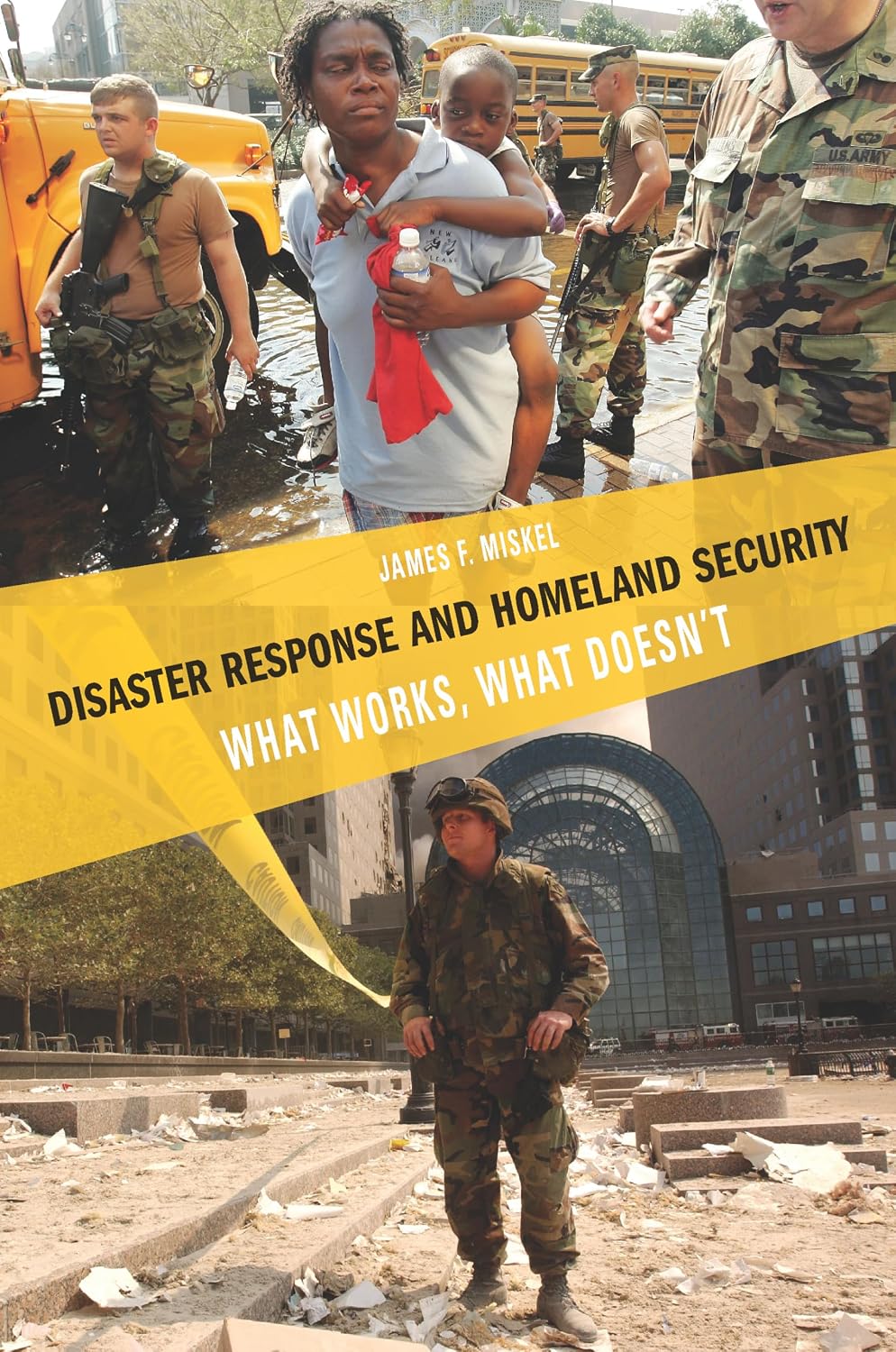
Disaster Response and Homeland Security: What Works, What Doesn't
Product details
| Management number | 231629553 | Release Date | 2026/06/18 | List Price | $8.58 | Model Number | 231629553 | ||
|---|---|---|---|---|---|---|---|---|---|
| Category | |||||||||
Hurricane Katrina is the latest in a series of major disasters that were not well managed, but it is not likely to be the last. Category 4 and category 5 hurricanes will, according to most predictions, become both more frequent and more intense in the future due to global warming and/or natural weather cycles. In addition, it is often said that another terrorist attack on the United States is inevitable; that it is a question of when, not whether. Add to that the scare over a possible avian flu pandemic. As a result, the United States should expect that disaster response―to natural and other types of disasters―will continue to be of vital concern to the American public and the policymakers and officials who deal with disaster response and relief, including the military. The U.S. disaster relief program reflects a basic division of responsibility between federal, state, and local governments that has generally stood the test of time. At the federal level, a single agency, FEMA―now under the Department of Homeland Security―has been charged with the responsibility for coordinating the activities of the various federal agencies that have a role in disaster relief. A successful disaster response requires three things: timely and effective coordination between state and federal governments; effective coordination among the federal agencies; and effective coordination between and among state and local government agencies. Miskel examines the effects that operational failures after Hurricanes Agnes, Hugo, Andrew, and Katrina have had on the organizational design and operating principles of the disaster response system program. He also discusses the impact of 9/11 and the evolving role of the military, and he identifies reforms that should be implemented to improve the nation's ability to respond in the future. Read more
| ISBN10 | 0804759723 |
|---|---|
| ISBN13 | 978-0804759724 |
| Edition | 1st |
| Language | English |
| Publisher | Stanford University Press |
| Dimensions | 6.13 x 0.44 x 9.25 inches |
| Item Weight | 9.3 ounces |
| Print length | 176 pages |
| Publication date | February 18, 2008 |
Bestseller ranking
Toddler Lamps & Lighting


Customers who viewed this product also viewed
Political Freedom


Correction of product information
If you notice any omissions or errors in the product information on this page, please use the correction request form below.
Correction Request Form