
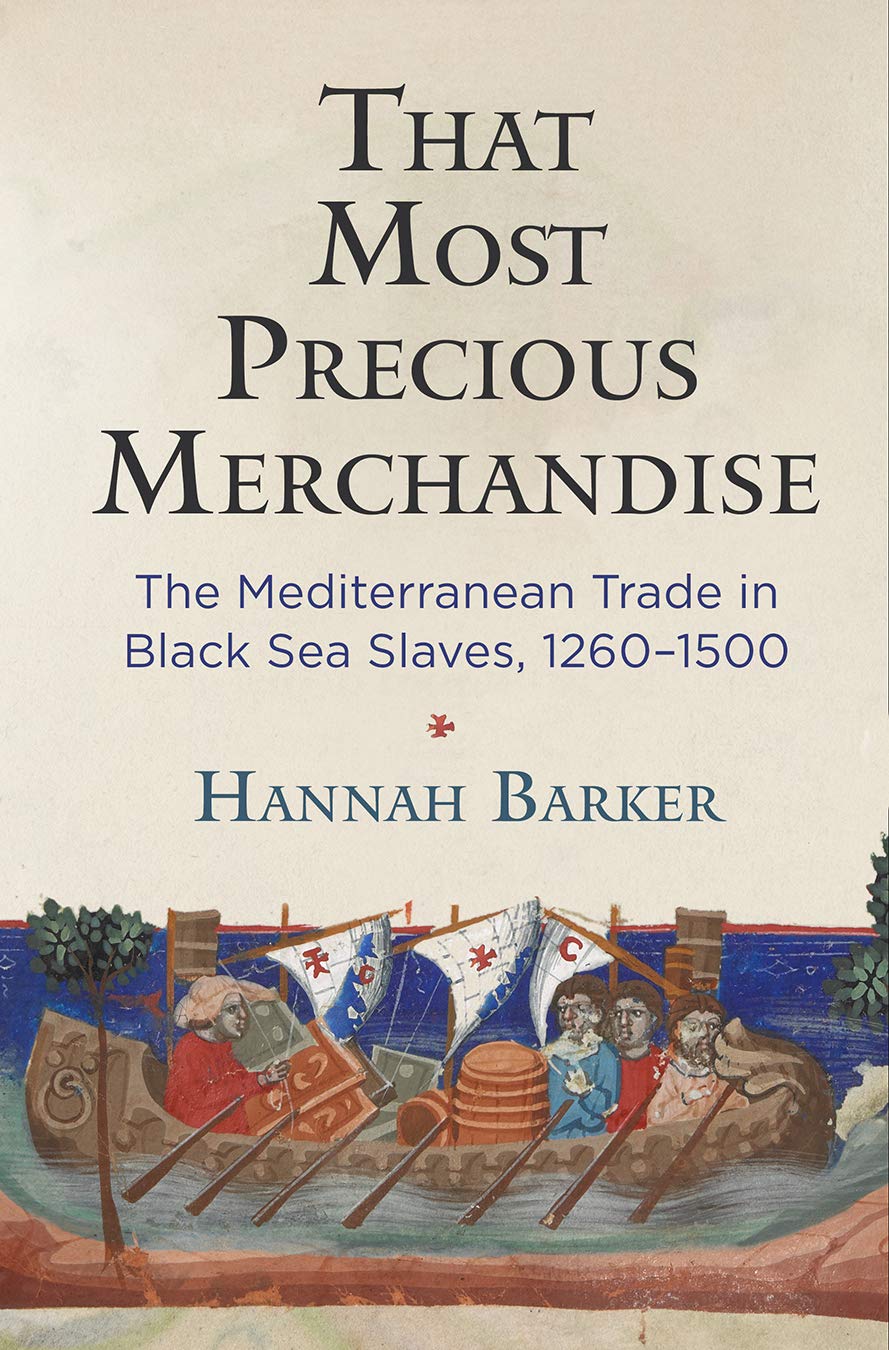
That Most Precious Merchandise: The Mediterranean Trade in Black Sea Slaves, 1260-1500 (The Middle Ages Series)
Product details
| Management number | 231963305 | Release Date | 2026/06/18 | List Price | $23.44 | Model Number | 231963305 | ||
|---|---|---|---|---|---|---|---|---|---|
| Category | |||||||||
The history of the Black Sea as a source of Mediterranean slaves stretches from ancient Greek colonies to human trafficking networks in the present day. At its height during the fourteenth and early fifteenth centuries, the Black Sea slave trade was not the sole source of Mediterranean slaves; Genoese, Venetian, and Egyptian merchants bought captives taken in conflicts throughout the region, from North Africa, sub-Saharan Africa, the Balkans, and the Aegean Sea. Yet the trade in Black Sea slaves provided merchants with profit and prestige; states with military recruits, tax revenue, and diplomatic influence; and households with the service of women, men, and children.Even though Genoa, Venice, and the Mamluk sultanate of Egypt and Greater Syria were the three most important strands in the web of the Black Sea slave trade, they have rarely been studied together. Examining Latin and Arabic sources in tandem, Hannah Barker shows that Christian and Muslim inhabitants of the Mediterranean shared a set of assumptions and practices that amounted to a common culture of slavery. Indeed, the Genoese, Venetian, and Mamluk slave trades were thoroughly entangled, with wide-ranging effects. Genoese and Venetian disruption of the Mamluk trade led to reprisals against Italian merchants living in Mamluk cities, while their participation in the trade led to scathing criticism by supporters of the crusade movement who demanded commercial powers use their leverage to weaken the force of Islam.Reading notarial registers, tax records, law, merchants' accounts, travelers' tales and letters, sermons, slave-buying manuals, and literary works as well as treaties governing the slave trade and crusade propaganda, Barker gives a rich picture of the context in which merchants traded and enslaved people met their fate. Read more
| ASIN | B087Z7RSP4 |
|---|---|
| XRay | Not Enabled |
| ISBN13 | 978-0812296488 |
| Language | English |
| File size | 4.9 MB |
| Page Flip | Enabled |
| Publisher | University of Pennsylvania Press |
| Word Wise | Not Enabled |
| Print length | 317 pages |
| Accessibility | Learn more |
| Screen Reader | Supported |
| Publication date | September 27, 2019 |
| Enhanced typesetting | Enabled |
Bestseller ranking
African Descent & Black





Customers who viewed this product also viewed
Cereal Containers




Correction of product information
If you notice any omissions or errors in the product information on this page, please use the correction request form below.
Correction Request Form